
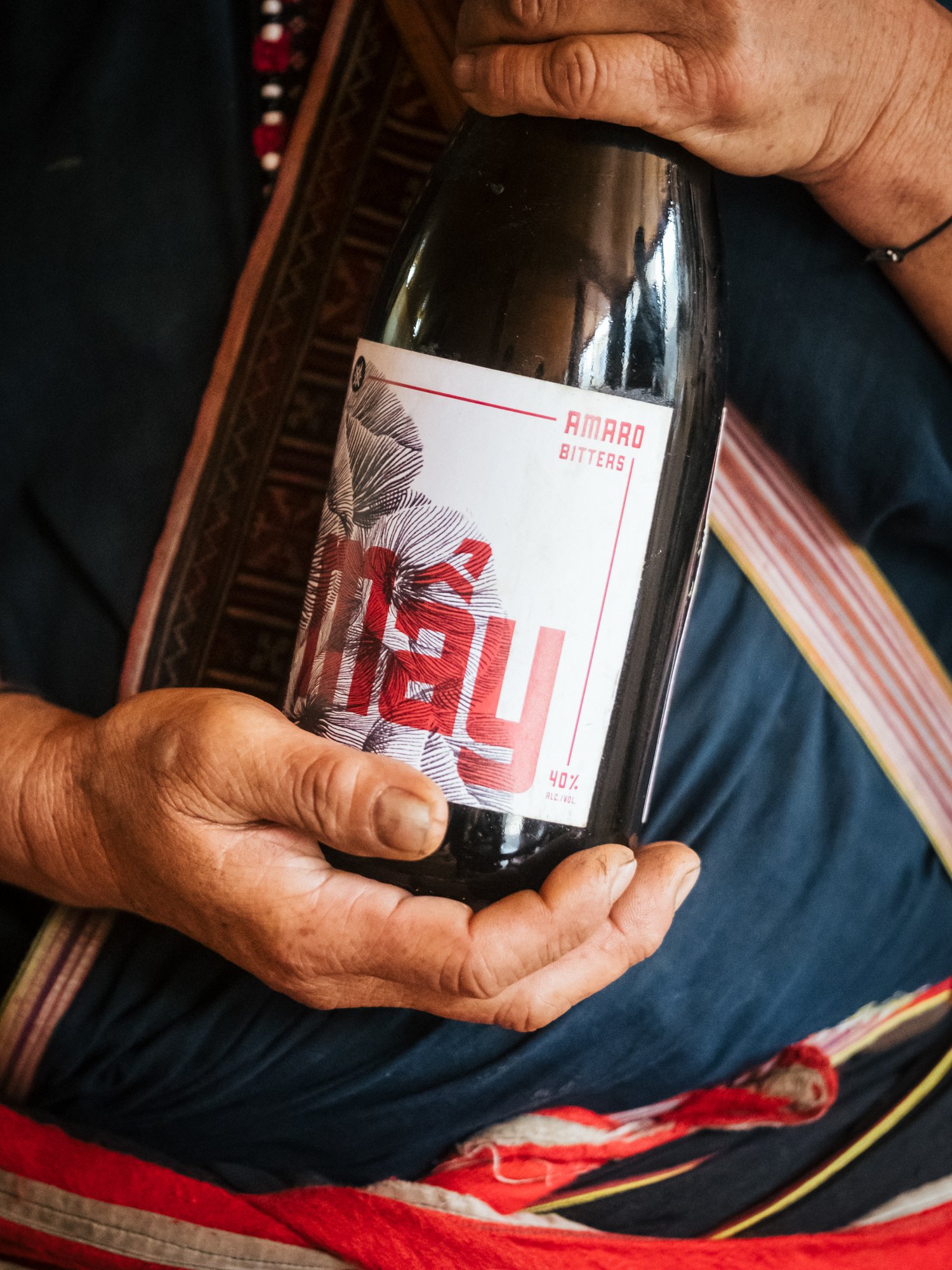
MẨY - Vietnamese Amaro Bitters
An amaro bitters made in partnership with Lý Lở Mẩy, a Red Dao medicine woman, and long-standing Sông Cái Distillery partner.
A journey of healing and unity.
Eight years in the making.

"Mẩy" - A Tribute to the Red Dao
In the spirit of honoring the Red Dao, together with our partner, Lý Lở Mẩy, we chose the name "Mẩy" for our amaro bitters.
In choosing “Mẩy” as the name for the collaborative product, Sông Cái Distillery and cô Chạn share the hope this unique amaro bitters will be distinctive in its homage to the Red Dao even in its namesake.
It has distinguishing notes similar to lapsang tea (smokey), sasparilla (root beer), wood tannins, and traditional Red Dao brown sap.
A standout and departure from Italian and European style amaro bitters.
40% alc./vol. (80 proof)
750 ML
$41.99


This project is unique as Sông Cái Distillery and cô Chạn are co-owners of the product.
Intellectual property and profits are split half/half as such to ensure cô Chạn receives her fair share of equity.
This is our part of efforts to push the concept of sustainability further so that our community partners can be equity owners as opposed to just suppliers within any given supply chain.


The Red Dao are renowned for their deep expertise in medicine and medicinal botany.
The recipe is based on traditional Red Dao herbal medicinal tincture/liqueurs (“Địa Tíu” in Red Dao language). Sông Cái Distillery sources botanicals from cô Chạn and has worked with her to work on recipe documentation and standardization.
Địa Tíu historically has been used as an herbal medicinal tincture/liqueur to treat muscle aches and digestive issues. The recipe historically uses over a dozen varieties of wild forest botanicals, from roots, bark, to leaves, and dried seeds - all selected for medicinal qualities.

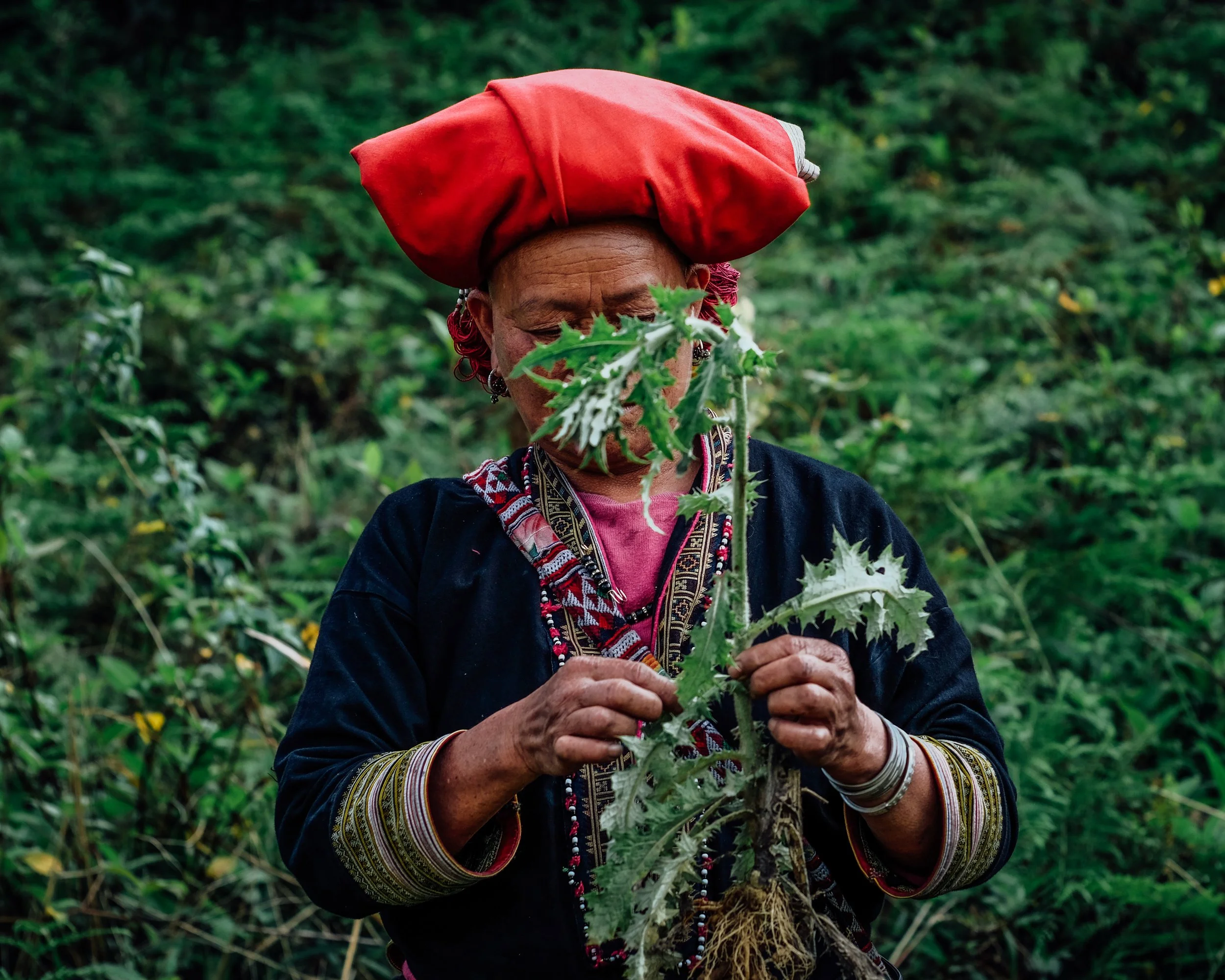

As all the botanicals are currently found in local forests, Sông Cái Distillery is working with cô Chạn and her community to propagate native trees and understory species to help maintain and restore local forests and biodiversity.
The abundance and availability of the botanicals used in Mẩy is directly linked to forest health and biodiversity.
We have in fact abridged the original recipe as harvest of certain botanicals was deemed unsustainable or at risk of endangering natural stock levels.
As forest health and native species abundance improves we hope to be able to add more botanicals into the Mẩy recipe as originally intended.


Bitterness is a prominent quality, but what makes this uniquely Red Dao are the smoky lapsang tea and sarsaparilla (root beer) notes with a distinctive honey and nutty finish.
Mẩy is perfect as an aperitif or digestif.
We recommend enjoying neat, on the rocks, mixed with root beer, or coffee, floats.