
KHÀ Natural Yellow Rice wine
ABV: 17.3 ABV, 3g/l Residual Sugar, 0.88% TA
A take on traditional rượu Cái (Vietnamese fermented rice wine) made purely from the fermentation of two types of native rice with an 18-month solera-style maturation in oak and terracotta amphorae.
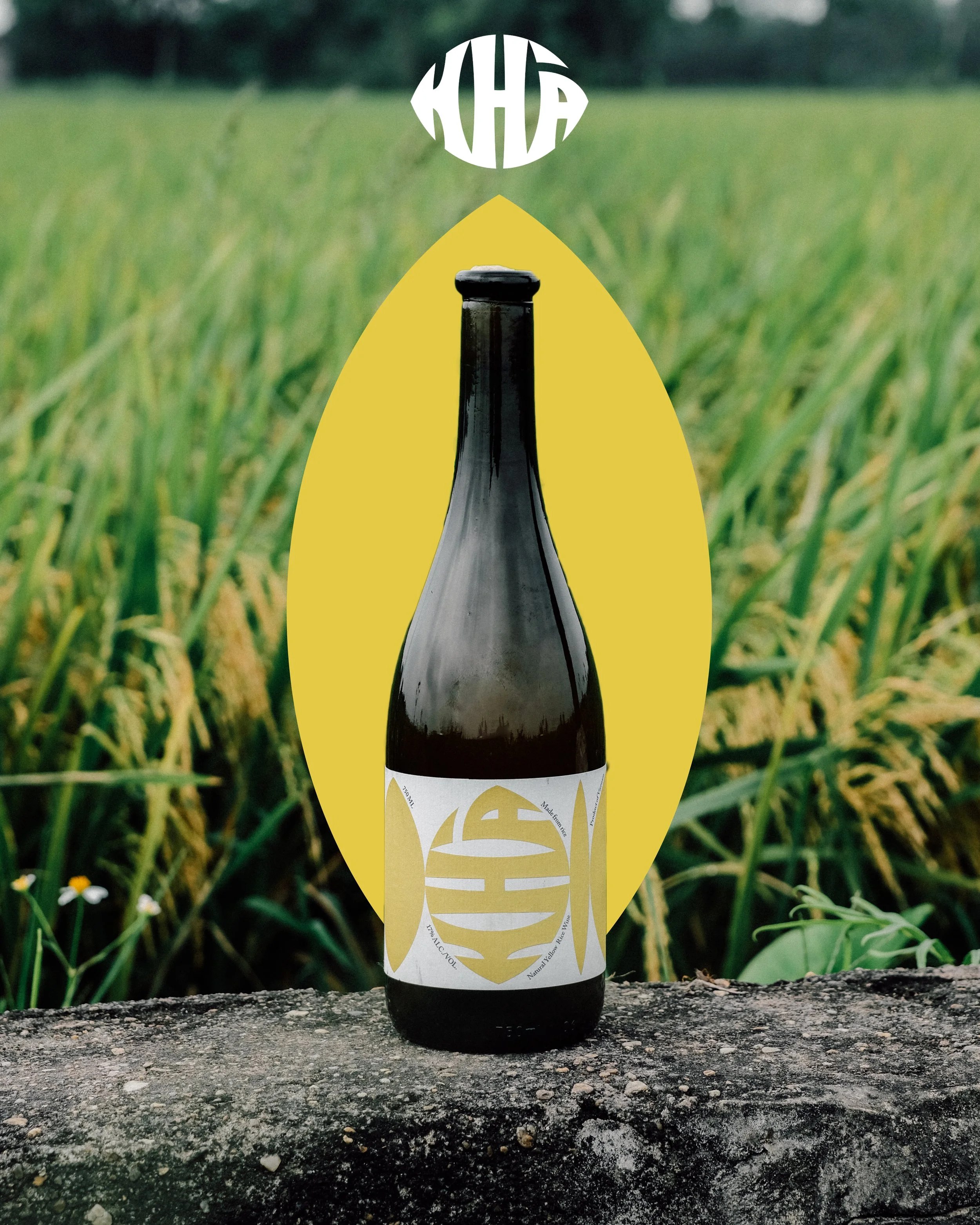
A take on traditional rượu cái (Vietnamese fermented rice wine)
Khà is a bold expression of Vietnam’s terroir - fermentation is carried out exclusively by native microbes and the wine is left to age on lees in the tropical climate before being bottled - no filtration or pasteurization.
Distinguished by bright acidity and distinct savory umami, think sake that drinks like an oloroso sherry / vin jaune.
Khà works well by itself or in cocktails and fits into the natural wine category as well as sherry / oxidative wine category, making it versatile in application in the kitchen as well as bar.
ABV: 17.3 ABV
3g/l Residual Sugar
0.88% TA
$34.99

Khà made purely from the fermentation of two types of rice native to Vietnam.
Yellow Flower sticky rice (nếp Cái Hoa Vàng): a prized sticky rice strain known for its aromatic qualities and fermentation capabilities (low amylose content). Popular and well-known in Vietnamese lowlands, nếp Cái Hoa Vàng is considered to be a precious rice strain for special occasions – festivals, ancestor offerings, etc.
Purple sticky rice (nếp Cẩm): considered superior and rare (during the period of Vietnamese monarchy, this rice was reserved exclusively for the emperor and royalty), it is a staple in H’mông cuisine and best cultivated in the highlands. When fermented, nếp Cẩm yields flavors akin to port wine with distinct levels of amino acids and umami.


After harvest, both rice are milled to remove husk but are not polished. The rice is soaked, steamed, then inoculated with a mix of local microbes (fungi, bacteria, and yeast).


Microbes include koji (aspergillus oryzae), but also include amylomyces, endomycopsis, rhizopus, and penicillium. The rice undergoes saccharification and solid-state fermentation until liquefaction and is formed into a mass.

The young wine is racked (to remove rice solids) and transferred to a solera-system of neutral wood and terracotta amphora for maturation and secondary fermentation, sur lees for a minimum of 18 months.
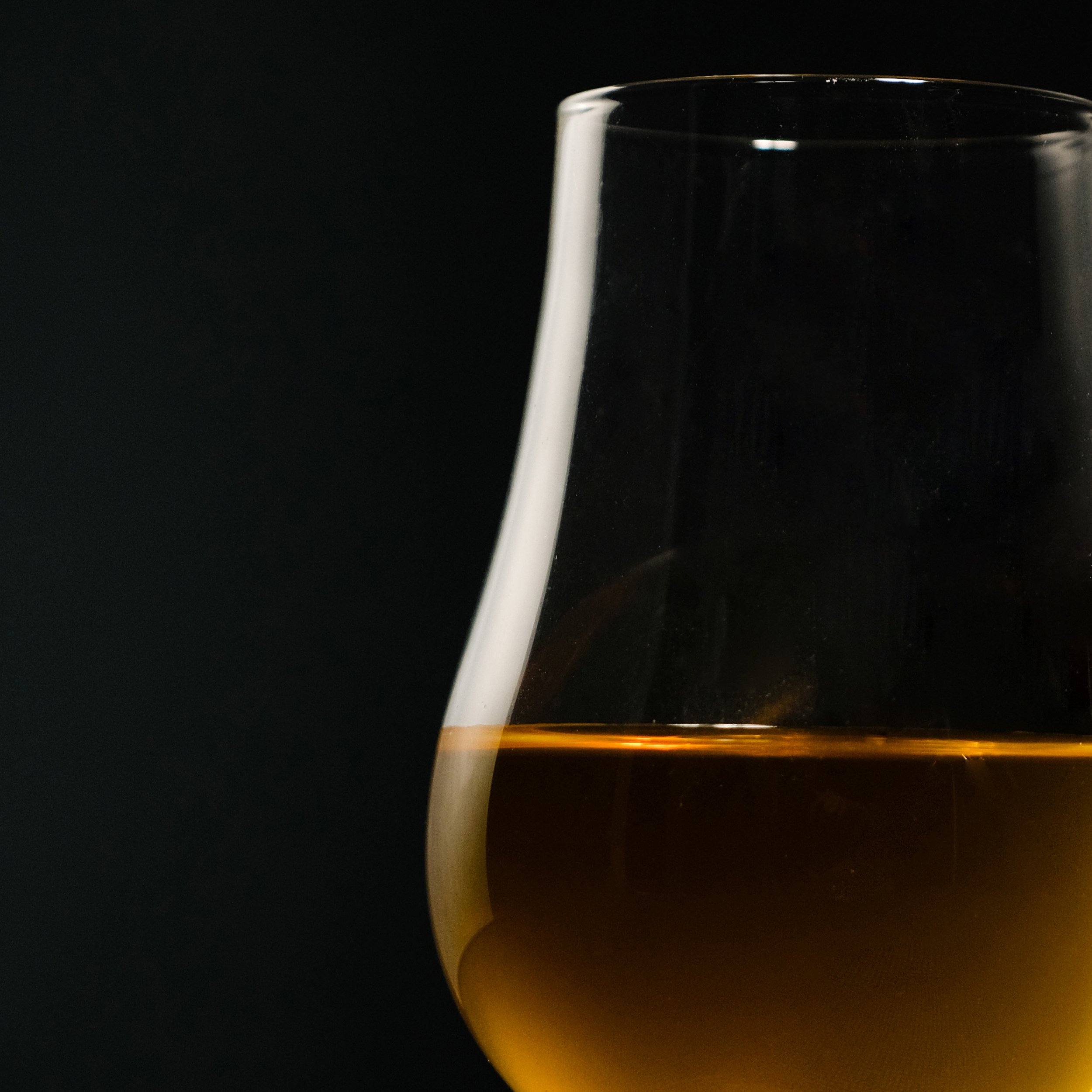
Distinguished by bright acidity and distinct savory umami, think sake that drinks like an oloroso sherry / vin jaune / rancio sec with notes reminiscent of tart peach, sticky rice, and soy sauce.