What Is Vietnamese Whisky? A New Approach to Single Grain Spirits
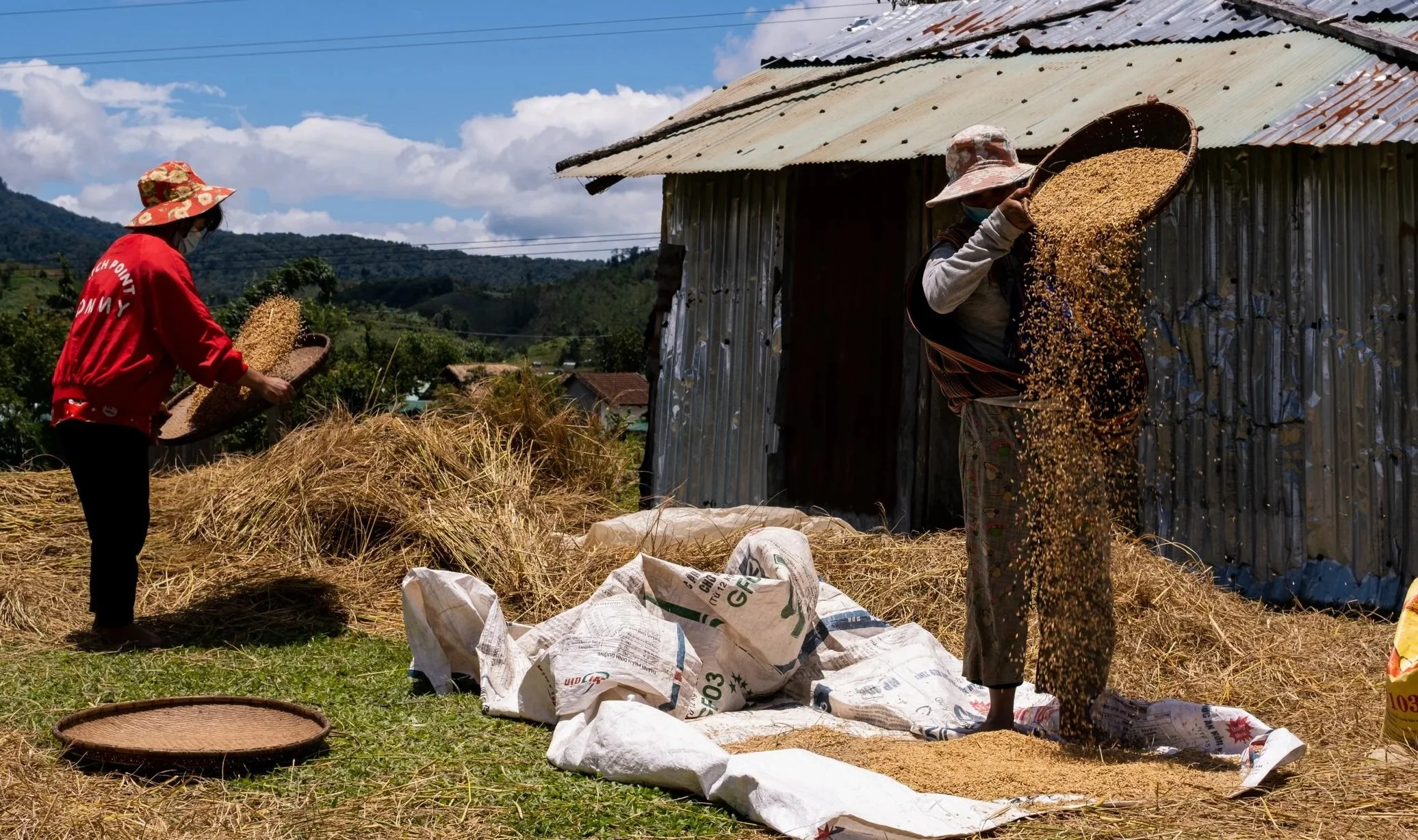
Vietnamese whisky is not defined by barley.
Like all whisky, it is defined by the careful refinement of grain, fermentation, distillation, and time. Across regions and eras, distillers have worked with what was available, shaping methods around local grains rather than fixed rules.
In Vietnam, that grain is rice.
This is where Vietnamese whisky begins, not as a variation of something else, but as a natural extension of place, agriculture, and fermentation traditions.
What Is Vietnamese Whisky?
Vietnamese whisky is a style of whisky made using locally relevant grains, most notably rice, combined with traditional fermentation techniques and distillation practices.
While most whisky around the world is made from barley, corn, or rye, Vietnamese whisky reflects a different agricultural and cultural foundation. Rice has long been central to Vietnamese food and drink, forming the basis of traditional alcohols such as rice wine (rượu cái) and rice spirits (rượu trắng).
Rather than substituting rice into an existing whisky model, Vietnamese whisky builds from these traditions upward, using the same principles that define whisky globally:
• Fermentation
• Distillation
• Maturation in wood
What changes is the starting point, and everything that follows.
How Is Vietnamese Whisky Different from Traditional Whisky?
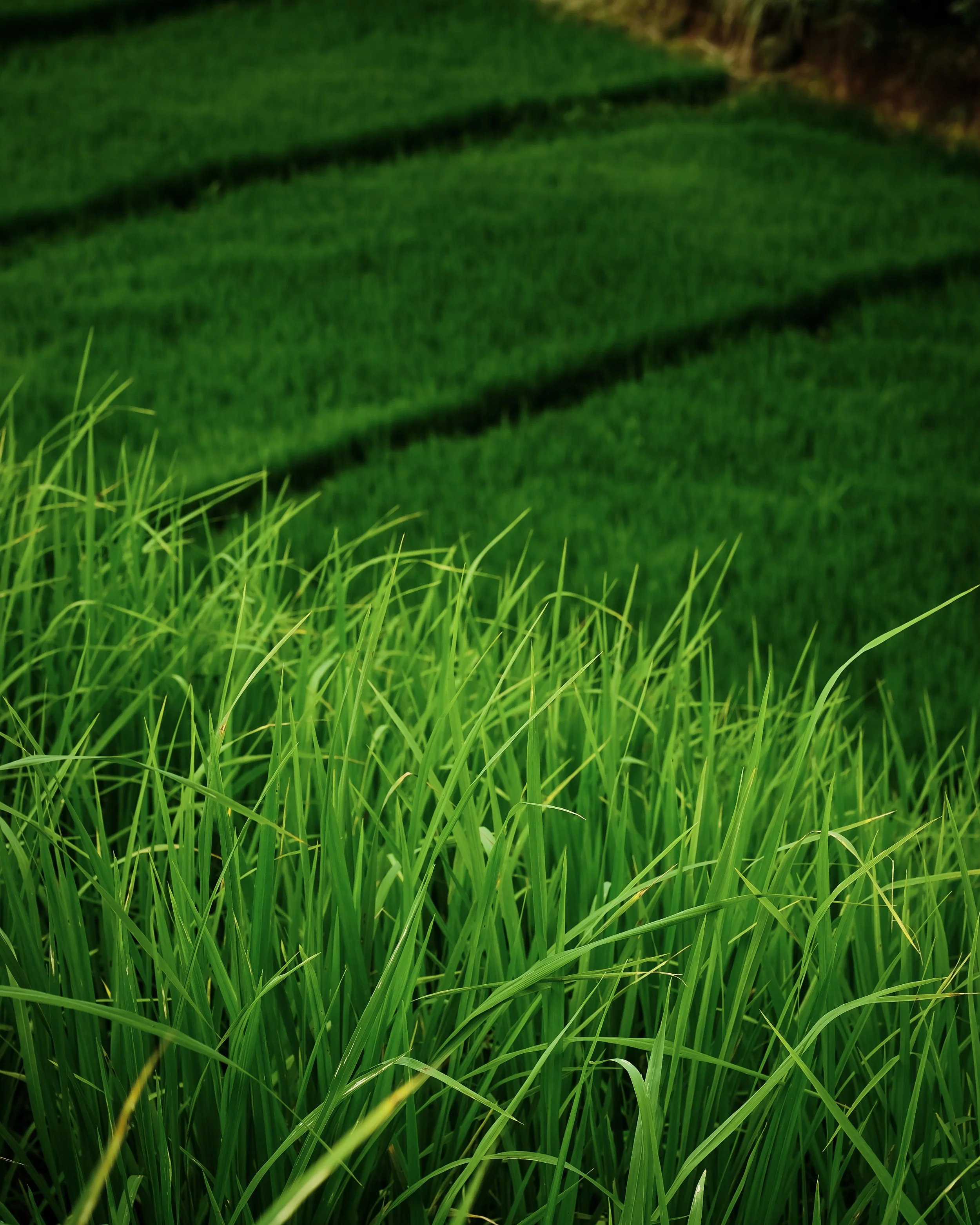
The difference begins with the grain.
Rice Instead of Barley
Most whisky-producing regions rely on grains that thrive in their climates. In Vietnam, rice is the dominant crop, cultivated across diverse terrains and deeply embedded in daily life.
Using rice is not an adaptation. It is an acknowledgment of place.
Rice behaves differently from barley during fermentation and distillation. It produces a softer, rounder spirit, often with subtle floral and fruit characteristics rather than the malt-driven intensity found in traditional whisky.
Traditional Fermentation Methods
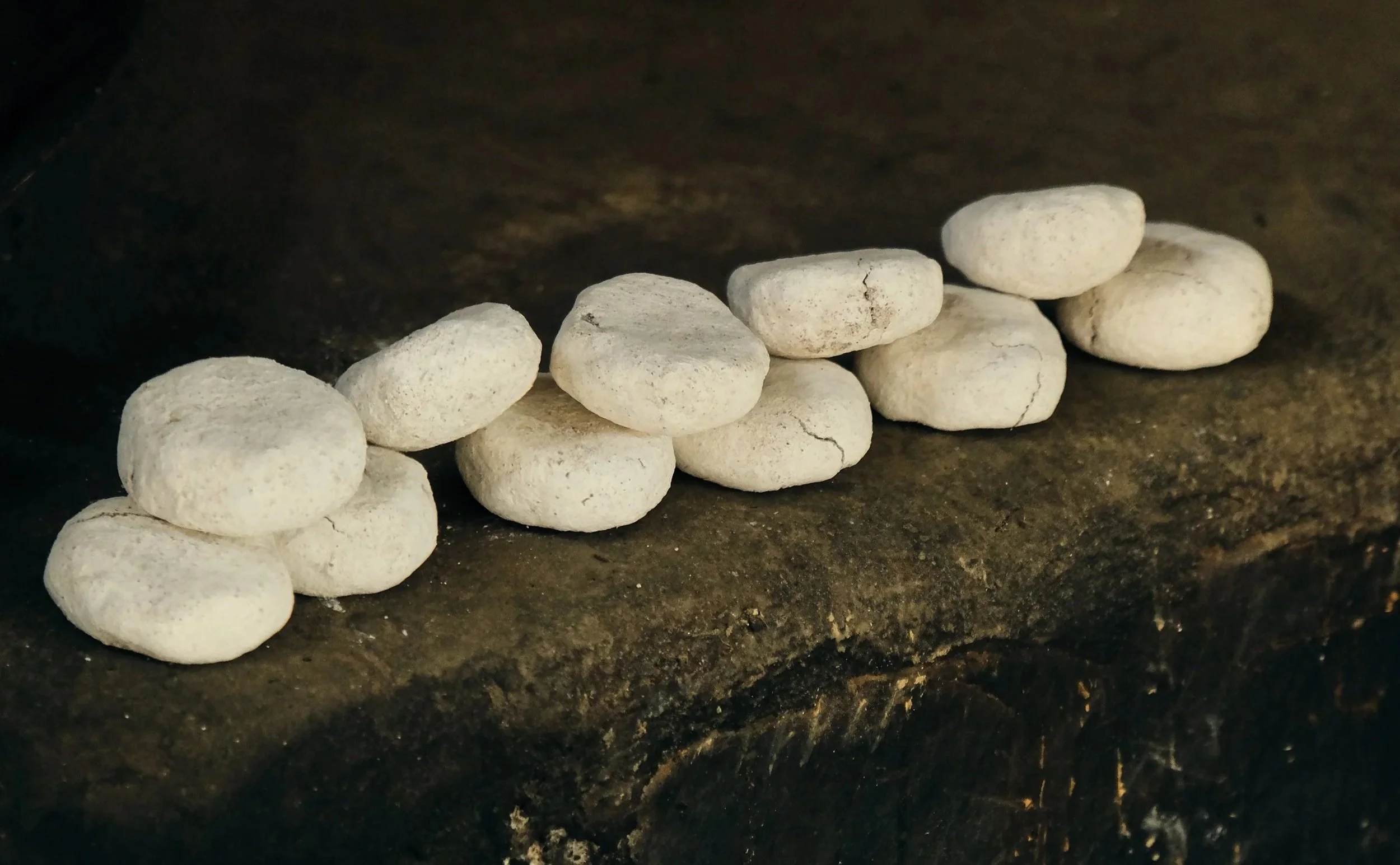
Vietnamese whisky often draws on fermentation techniques developed over generations.
One example is solid-state fermentation using bánh men, a traditional mixed-culture fermentation starter. Unlike liquid fermentation, this method uses fungi (similar to koji) to break down rice into a liquid mash that is then distilled. This process is also critical to flavor production through the production of fruity acidity and savory umami notes.
The process is slower but capable of producing deep and layered flavors distinct to the fermentation style. This approach prioritizes character over efficiency.
A Focus on Single Grain Production
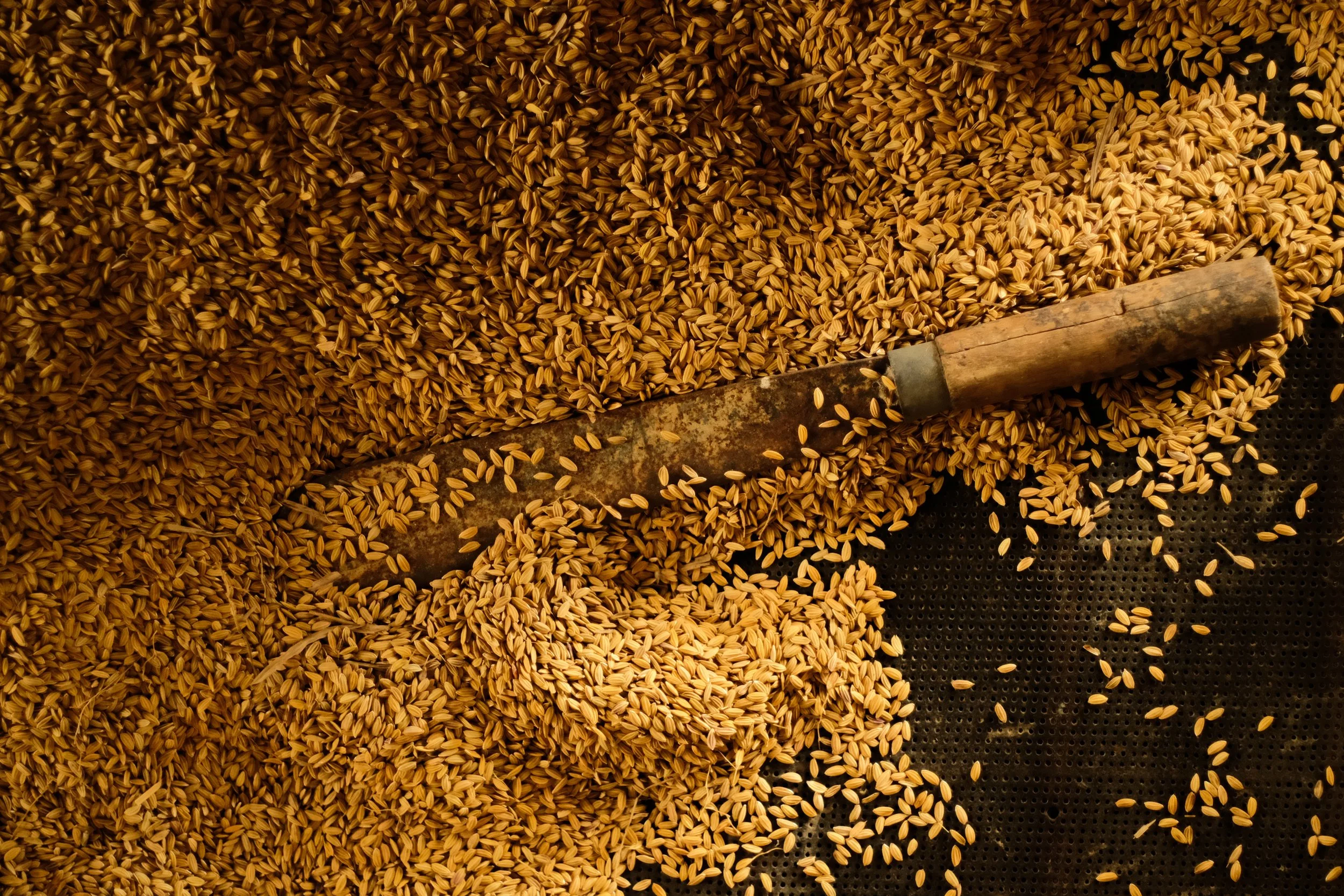
Single grain whisky emphasizes working with one grain and understanding and expressing it fully.
In Vietnamese whisky, this means selecting a specific type of rice, not just for yield, but for how it ferments, carries texture, and develops over time.
Each decision remains visible:
• The agricultural conditions
• The fermentation behavior
• The interaction with wood
The Role of Rice in Vietnamese Spirits
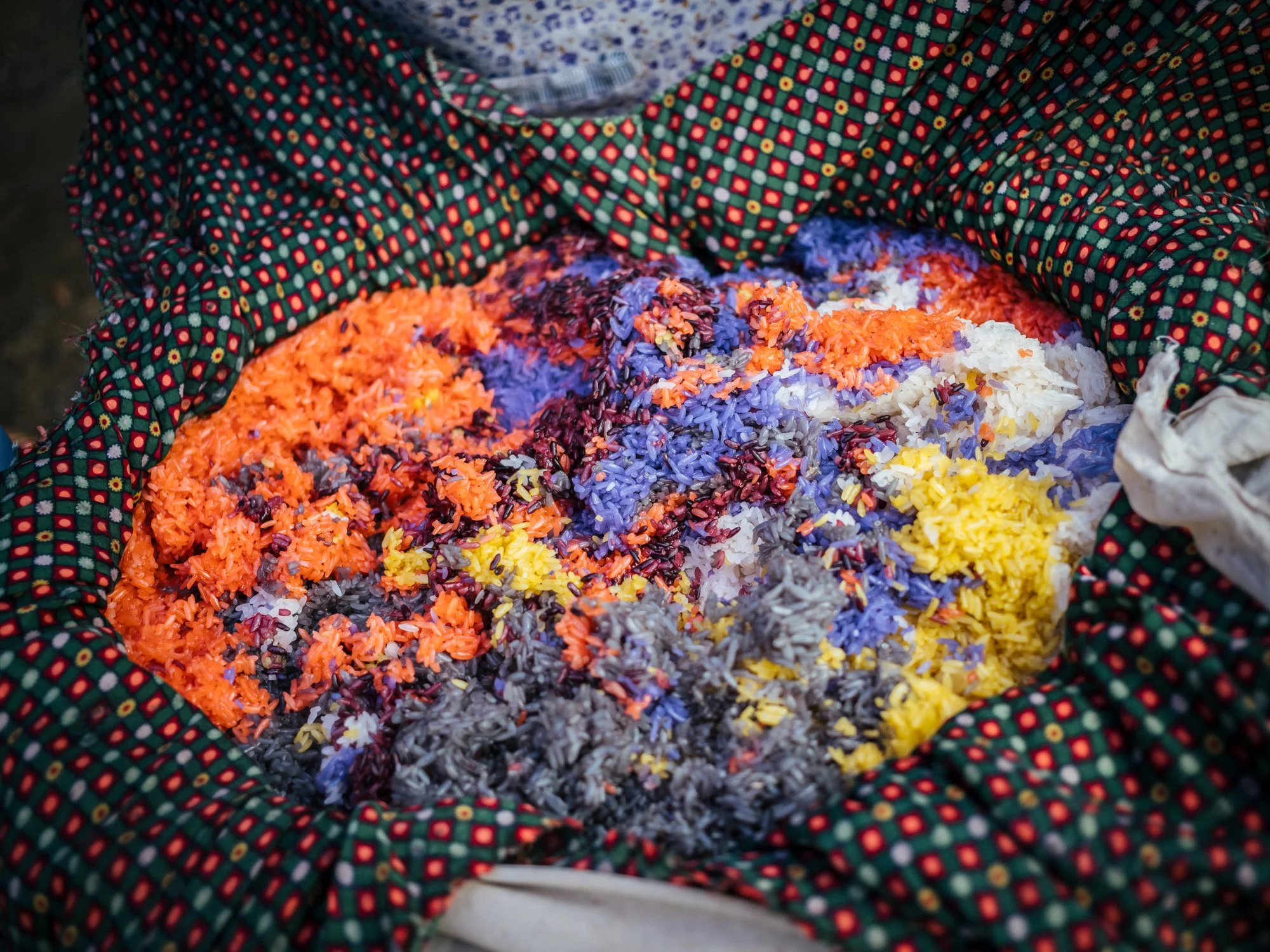
To understand Vietnamese whisky, it helps to understand Vietnamese spirits more broadly.
Vietnamese alcohol has historically centered around rice-based fermentation. From everyday rice wines to ceremonial spirits, the techniques used today are rooted in long-standing practices dating back nearly 1000 years .
These traditions emphasize:
• Mixed microbial fermentation cultures
• Solid-state fermentation
• Slow, hands-on distillation processes
Vietnamese whisky extends this lineage into a new category.
It does not replace traditional Vietnamese alcohol, it evolves from it.
How Vietnamese Whisky Is Made
Although the ingredients and techniques may differ, the structure of whisky-making remains consistent.
1. Grain Selection
The process begins with rice chosen for its behavior in fermentation and its ability to carry flavor and texture.
In particular, Vietnam favors sticky rice for fermentation and distillation.
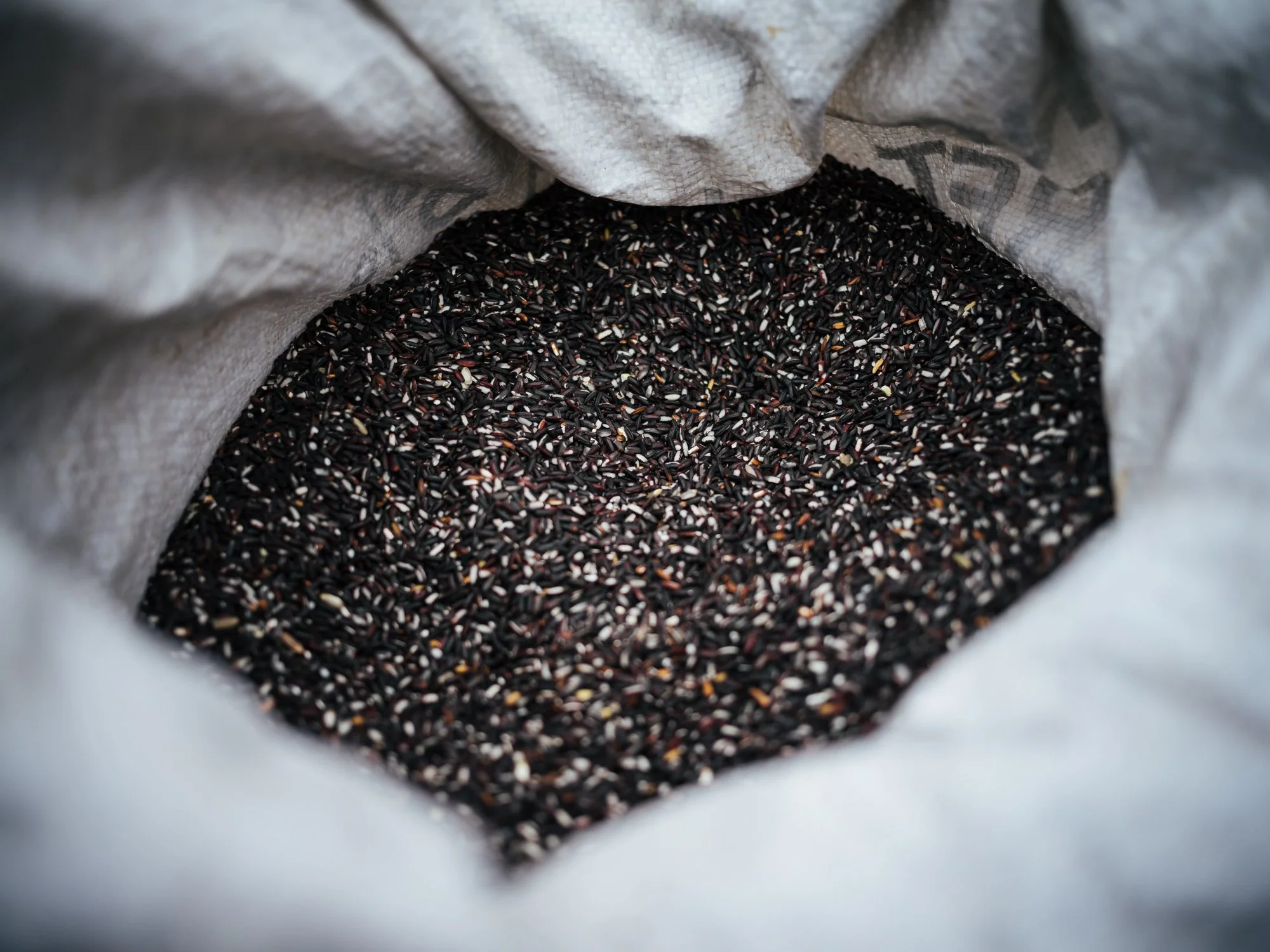
Certain varieties, such as nếp cẩm (purple sticky rice), are valued for their aromatic complexity and natural richness.
Our rice is grown in dry upland farmed systems, distinctly different from floor paddies often associated with rice farming. The resulting rice grains are often smaller, higher in protein and ferment with more fruity esters and savory umami notes.
2. Fermentation
Instead of converting grain into liquid mash, rice is often fermented in solid form using traditional starters like bánh men.
This stage develops:
• Gentle sweetness
• Subtle fruity pineapple acidity
• Layered savory umami aromatics
All this before distillation begins.
3. Distillation
The fermented material is distilled to concentrate alcohol and refine the spirit.
The goal is not to strip away character, but to clarify it, retaining the texture and aromatic qualities developed during fermentation.
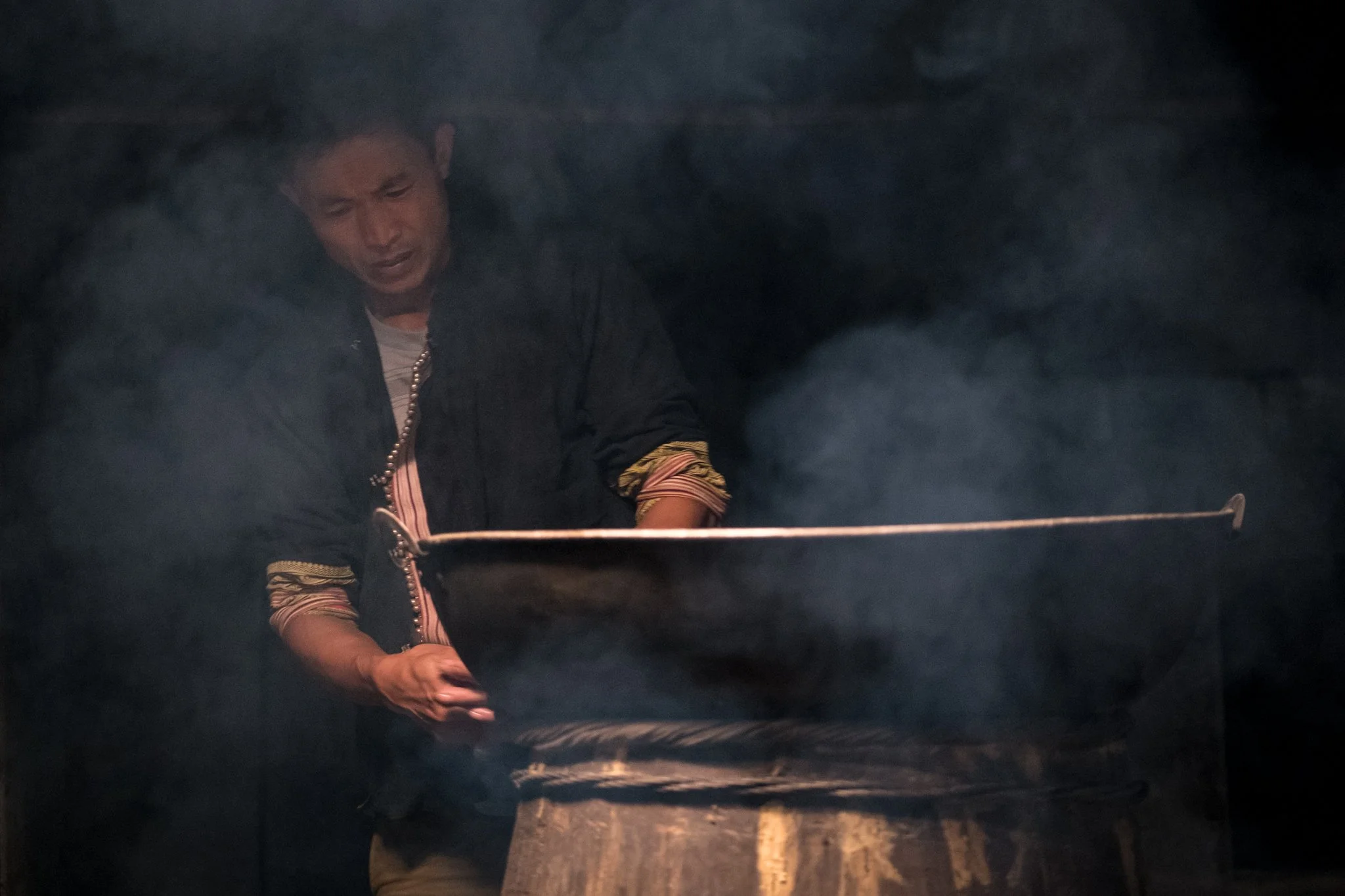
Vietnam has historically used direct fired alquitar stills to transform fermented rice into rượu trắng, or rice spirit.
We continue this tradition.
Our whisky uses both direct-fired copper pot stills and direct-fired wooden alquitar stills.
The use of direct fire, while less efficient, allows us to express the qualities and flavors of rice the way our ancestors did.
4. Maturation
Like other whiskies, Vietnamese whisky is aged in oak wood.
However, maturation may be adapted to complement the base spirit. Barrels can be selected or prepared to support—not overpower—the characteristics of the rice-derived distillate.
Our barrels are charred American oak barrels that have been seasoned with different fermented rice wines before being used to age our whiskies. We use a combination of an oxidative yellow rice wine (similar to oloroso sherry), sweet purple rice wine (similar to port wine), and a blackened rice wine (similar to madeira). By doing this, we create a flavor profile distinctly Vietnamese.
Our maturation style takes inspiration from the Vietnamese saying: rượu trên be / chè dưới ấm (the best alcohol floats to the top and the best tea is at the bottom of the teapot). We use a solera system to age our whiskies. We pull the top third of our barrels and re-fill with younger distillate, ensuring that we only pull the best that floats to the top.
This creates a more integrated and balanced profile over time.
Is Vietnamese Whisky Still Whisky?
Yes.
Whisky has never been defined by a single grain. Across the world, different regions have used what was available whether barley in Scotland or corn and rye in the United States.
What unites these styles is not the ingredient, but the process:
• Fermentation
• Distillation
• Maturation
Vietnamese whisky follows the same structure. It simply begins somewhere else.
Vietnamese Craft Spirits and the Future of Whisky
Vietnamese whisky is part of a broader movement in Vietnamese craft spirits, a shift toward refining small-batch production, local sourcing, and process-driven quality.
This approach values:
• Agricultural specificity
• Traditional knowledge
• Slower, more deliberate methods
• Intentional branding and storytelling to move beyond the local village markets
As more distilleries explore these ideas, Vietnamese spirits are beginning to define their own identity on the national and global stage.
Not by replicating existing categories, but by contributing something new to them.
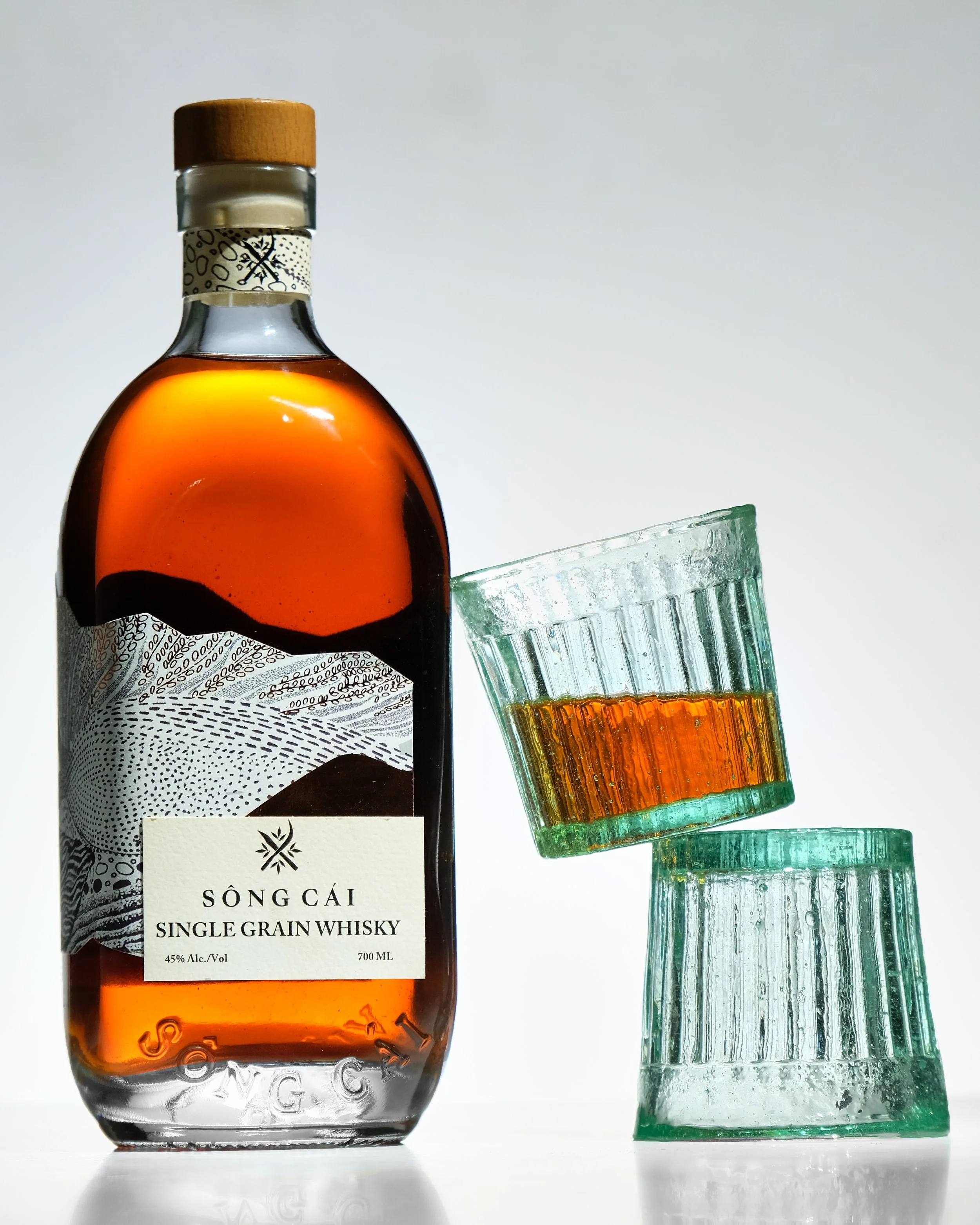
Discover Vietnamese Whisky
Vietnamese whisky offers a different way of thinking about whisky, one shaped by rice, fermentation traditions, and a focus on coherence rather than convention.
It is not designed to imitate familiar styles. It is designed to make sense where it is made.